A Revival Heard ’Round the World
After 30 years, the legacy of Brownsville endures
Throughout church history, revivals have appeared during seasons of spiritual hunger, transforming not only congregations but also denominations, communities, and even nations.
The Brownsville Revival, which began on Father’s Day 1995 at Brownsville Assembly of God in Pensacola, Florida, became one of the most influential expressions of revival culture during the late 20th century.
Over five years, millions of people from around the globe arrived in Pensacola to encounter God’s presence.
Preparation
The story of Brownsville started years before the revival when Pastor John Kilpatrick, sensing God’s leading, restructured the church schedule to include a weekly Sunday night prayer meeting.
These routine gatherings soon evolved into extended seasons of intercession, with banners throughout the sanctuary reminding attendees to pray for revival, missions, families, healing, and schools.
Meanwhile, Missionary-Evangelist Steve Hill experienced the great Argentinian revival of the 1980s. Hill also visited other locations reporting moves of God, including Toronto and London.
By early 1995, Hill’s preaching had grown increasingly bold, accompanied by powerful manifestations of the Spirit.
What the pastor carefully nurtured in the hearts of congregants the evangelist came to harvest. The June 18, 1995, service sparked the ongoing revival — with four to five weekly meetings continuing for half a decade.
Message
Brownsville Revival preaching was characteristically simple yet profoundly transformative. It emphasized three defining themes.
First was repentance. Conviction of sin was deep and undeniable. Hill’s messages encouraged reverential fear, while also pointing listeners to God’s overwhelming love.
In response, men and women openly confessed sins, reconciled broken relationships, and surrendered their lives fully to Christ.
During the first year alone, the church recorded more than 100,000 decisions for Christ. By the revival’s conclusion, there were nearly 200,000 total conversions.
The second theme was renewal of believers. Countless pastors, missionaries, and laypeople came weary and left refreshed. Ministers returned to their pulpits with renewed fervor, while parishioners felt strengthened in faith and purpose.
Finally, Brownsville emphasized global evangelism. Missionaries testified of fresh empowerment for ministry, and a generation of young people answered the call to full-time ministry.
Altar Time
The altar in Pentecostal tradition symbolizes surrender, sacrifice, and encounter.
At Brownsville, the altar call was not a brief conclusion to a service, but the revival’s heartbeat.
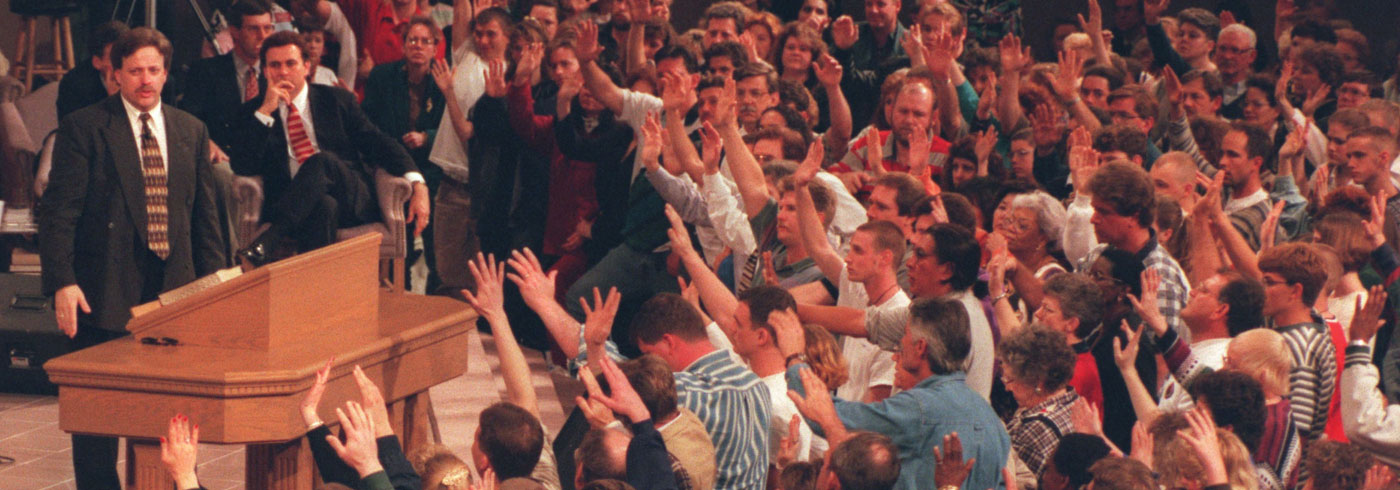
Hundreds of people typically responded, seeking salvation, renewal, healing, or empowerment.
For attendees, the altar service became the most memorable part of the revival. Many traveled long distances solely for this experience, believing God would meet them there.
People commonly experienced tears, laughter, trembling, and an overwhelming sense of God’s love. Families were reconciled, addictions broken, and callings confirmed. The altar was not the end of the service, but its climax.
Personal encounter with God is essential for sustaining spiritual momentum. Brownsville’s altar ministry illustrated this revival principle.
The Spirit’s work within individual lives rippled through churches worldwide as attendees returned home with renewed vision and faith.
Worship
Brownsville’s music fueled the revival atmosphere. Worship Pastor Lindell Cooley led the congregation with heartfelt intensity that mirrored the revival itself.
The Spirit’s work within individual lives rippled through churches worldwide as attendees returned home with renewed vision and faith.
Cooley’s raw passion and energetic delivery were far from polished. His exuberant style embodied the authenticity of Spirit-led worship.
The worship team prepared hearts for the Word and altar, creating an atmosphere where people could experience God’s presence tangibly.
Long nightly services demanded stamina and creativity. Singers and musicians learned to follow the Spirit’s leading in real time, extending choruses, shifting keys, and improvising lyrics to reflect what God was doing. In this sense, artistic creativity was not ornamental; it was essential.
Songs like “Mercy Seat” captured the heart of Brownsville’s message: repentance and returning to God. This piece in particular served as a musical altar call, infusing the moment with both conviction and invitation.
The mixture of old songs and new choruses at Brownsville created a unique soundscape. Brownsville worship spread as participants left the meetings with CDs, enabling congregations across the nation and around the world to incorporate these songs into their own services.
Media
Unlike earlier revivals that were chronicled primarily through newspapers and handwritten testimonies, Brownsville was documented in motion and sound.
While print publications carried stories of the revival, there were also VHS recordings that circulated widely.
Christian television networks broadcast services, making it possible for people to encounter the revival in their own living rooms.
Believers duplicated and passed around recordings, even mailing them overseas to share the preaching, teaching, and music with those who could not attend in person.
Brownsville AG utilized the emerging internet, creating a website where people could hear revival testimonies and read updates.
Attendees helped bring the revival’s reach into the digital age by sharing stories of transformation through online chat rooms, discussion forums, and email chains.
Extensive video footage continues to expose audiences to Brownsville Revival services. Videos on YouTube allow Generation Z viewers to experience a revival that took place before many of them were born.
Lasting Impact
The Brownsville Revival played a pivotal role in revitalizing the Assemblies of God during a period when some perceived a decline in spiritual vitality.
Thomas Trask, who served as AG general superintendent from 1993–2008, remarked that before Brownsville, the Fellowship had “become content … careless … and cooled off.”
The revival reignited a passion for holiness, evangelism, and the manifest presence of God. Reports of salvations, water baptisms, Spirit baptisms, and church growth surged as pastors visited Brownsville and then led their own congregations toward renewal.
In 1997, Assemblies of God missions giving reached $117 million — the highest in its history to that point. Leaders credited the revival with stirring hearts to reach the lost.
Brownsville also inspired parallel moves, such as the Smithton Outpouring in Missouri.
Pastor Steve Gray attended Brownsville in 1996 and brought the passion for revival back to his small congregation. Over the next three years, the Smithton Outpouring drew more than 250,000 visitors, demonstrating the ripple effect of Brownsville’s influence.
Legacy
Brownsville defined for a generation what revival looks like: crowded altars, extended worship, testimonies of repentance, and hours of prayer.
Those images set a visual standard of revival that has influenced countless churches since.
Though nightly revival services concluded during the year 2000, Brownsville’s impact continues.
Thousands of people accepted Christ and sensed a call to ministry during those years of outpouring. Some are now pastors and missionaries.
Churches across the Assemblies of God still trace renewal and growth to Brownsville’s influence.
Above all, the revival reminds believers that God still hears prayers and answers with His Spirit.
Brownsville was more than a moment. It was a movement, a foretaste of what God can and will do again.
As we reflect on the outbreak of that revival 30 years ago, may we pray like the Psalmist, “Will you not revive us again, that your people may rejoice in you?” (Psalm 85:6).
This article appears in the Fall 2025 issue of Influence magazine.
Trending Articles
Influence Magazine & The Healthy Church Network
© 2026 Assemblies of God