Radio Altar
How Revivaltime helped shape the Assemblies of God
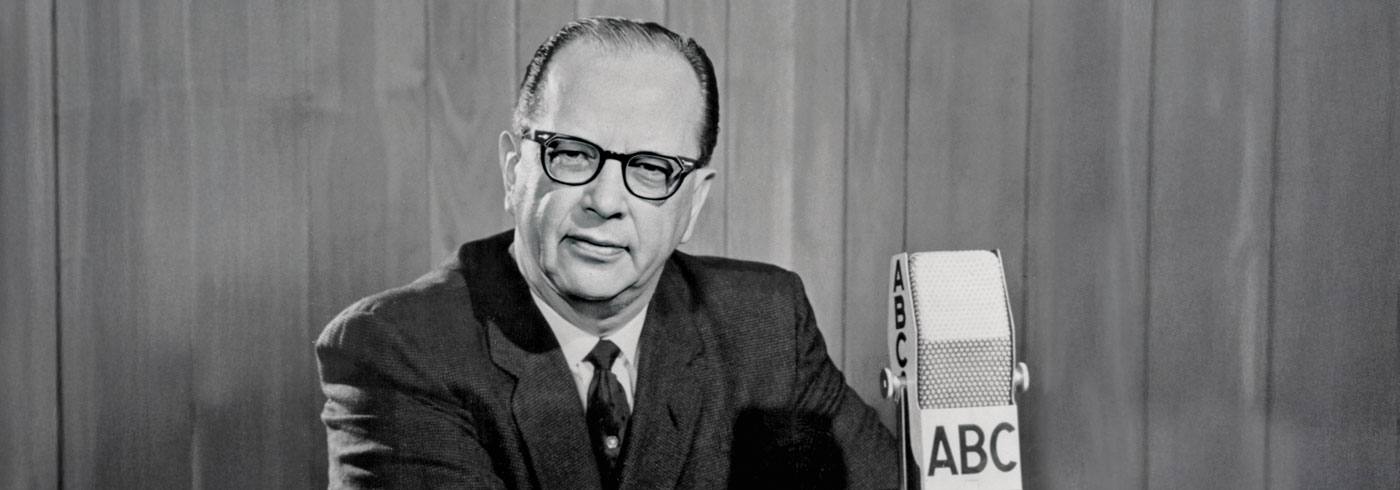
Revivaltime, a radio broadcast that aired weekly from 1950 until 1995, was one of the most successful ministries of the Assemblies of God (AG).
Hosts C.M. Ward and Dan Betzer reached millions of listeners “coast to coast and around the world,” as the program’s familiar introduction intoned.
Broadcasting started during 1946 with Sermons in Song, a 15-minute program featuring rotating speakers.
The name changed to Revivaltime in 1950, and the duration expanded to 30 minutes. AG General Superintendent Wesley Steelberg served as the first speaker.
Canada native Charles Morse (C.M.) Ward became the full-time host in 1953, with the show airing on 275 ABC radio stations. A voracious reader with a sharp wit, Ward pastored in Bakersfield, California, prior to becoming the voice of Revivaltime.
Each program began with the Revivaltime Choir — comprised of students from Central Bible College — singing “All Hail the Power of Jesus’ Name.” This opening became so familiar some referred to it as the unofficial Assemblies of God anthem.
A Bible reading and sermon came next, followed by an invitation to kneel at the “radio altar” while the choir sang Ira Stanphill’s “Room at the Cross for You.”
The program quickly gained an impressive following. For decades, Revivaltime received more than 10,000 letters monthly from listeners.
While 1 million Americans attended AG churches during 1960, an estimated 12 million tuned in to Revivaltime. Add to that the numerous Revivaltime broadcasts in other countries, and the magnitude of the program’s influence quickly becomes obvious.
Ward was elected president of Bethany Bible College in 1973 and moved to California, where the school was located. He continued hosting Revivaltime until retiring in 1978.
At the time, Ward was one of the best-known names in Christian broadcasting.
Dan Betzer — a singer, evangelist, church planter, writer, and veteran radio and television personality — followed Ward as host. Having produced the program since 1977, Betzer became the new voice of Revivaltime in 1979.
Betzer helped Revivaltime increase its reach through syndication. At one point, the program aired on some 600 stations in 80 nations.
By 1990, Revivaltime ranked third in audience size among 30-minute religious broadcasts in America, according to National Religious Broadcasters.
In 1987, Betzer became pastor of First Assembly of God in Fort Myers, Florida. He continued to serve Revivaltime until he retired as host in 1995.
Citing changing times, AG leaders replaced Revivaltime with a new radio program, Masterplan, led by Jeff Brawner.
Although Revivaltime signed off the air more than 30 year ago, its example continues to provide lessons for ministry today.
Spiritual Mission
When naming the program, Steelberg envisioned “a broadcast which will be brimful of the Spirit and power of Pentecost … a soul-saving agency, potent with conviction, as well as a vehicle for Christian cheer and gladness.”
While 1 million Americans attended AG churches during 1960, an estimated 12 million tuned in
to Revivaltime.
“We pray,” Steelberg added, “that it will indeed promote a time of revival.”
Revivaltime remained true to this spiritual mission.
For many listeners, the broadcast was an introduction to Pentecostal spirituality. Both Ward and Betzer engaged audiences using simple, direct language, powerful illustrations, and stories.
The hosts utilized spiritual gifts on the air, sometimes offering a “word of knowledge” to address a specific situation within the listening audience.
Correspondence from listeners frequently credited Revivaltime with playing a role in a salvation, healing, or other divine intervention.
During an era when some high-profile radio and television evangelists fell into scandal or promoted unbiblical beliefs, Revivaltime was known for ethical integrity and solid doctrine.
Simple and Profound
Upon Ward’s retirement, he gave Betzer the following admonition: “Dan, be a gospel preacher. Preach about Jesus. This is the power of the gospel. It is the only message in this world that can transform wicked hearts.”
Betzer followed this advice, saying, “I do not come to this radio microphone to preach anything other than Christ and Him crucified.”
For Betzer, the most powerful and profound sermons are often the simplest.
“Don’t use big words when little ones will do just as well — if not better,” he said. “Don’t try to dazzle anyone with your vocabulary.”
Modern Methods
Pentecostals have frequently been early adopters of mass media and new technologies, using modern methods to share the timeless gospel story.
During the early 1920s, International Church of the Foursquare Gospel founder Aimee Semple McPherson broke ground as a woman preaching on the radio.
In 1925, AG minister Robert Craig launched Christian radio station KGTT in San Francisco.
While some churchgoers viewed radio with suspicion, many Pentecostals saw it as a divinely appointed means of evangelism.
Within three years of the program’s debut, one church leader called Revivaltime “the greatest single missionary project the Assemblies of God has ever launched.”
Broad Appeal
Revivaltime modeled winsome sermons and programming with broad appeal.
The show received letters from ordinary people, as well as prominent figures, including Queen Juliana of the Netherlands, U.S. President Lyndon B. Johnson, and American blues pioneer W.C. Handy.
Quality music added to the show’s appeal. Promoters boasted that the Revivaltime Choir was among the most popular recording groups for its label, Word Records. By 1976, the choir had produced 18 consecutive records with Word.
Revivaltime dovetailed with the charismatic renewal, which brought Pentecostal spirituality into evangelical and mainlines churches. At the height of this renewal throughout the 1960s and ’70s, the broadcast helped disciple charismatic members and ministers of non-Pentecostal churches.
One Presbyterian minister wrote to say a sermon had encouraged him. At the end of his letter, the minister requested prayer so that he “might know the full power of God’s Holy Spirit.”
Revivaltime spoke to listeners’ hearts. Ward and Betzer achieved both clarity and intimacy over the airwaves, communicating directly to individual audience members. They spoke in a warm, conversational style, addressing listeners as neighbors and friends.
Radio Altar Call
Each message culminated with an appeal for listeners to kneel beside their “radio altar” and respond in prayer.
Evoking an old-fashioned altar call, this invitation was the heart of the program.
Ward remarked, “The radio altar is minutes of meaningfulness. Folk in increasing numbers are pausing at it to take a long, hard look at themselves and their ultimate reflection in eternity. God comes to us all in this moment of choice.”
Family Identity
Assemblies of God leaders insisted the purpose of Revivaltime was evangelism, not denominational promotion. Nevertheless, Revivaltime contributed to the Fellowship’s identity and branding.
Marketing links tied the popular program to individual churches. AG congregations sponsored local broadcasts, posted signs advertising the program, and distributed Revivaltime tracts and booklets.
These efforts helped the show’s listeners find local Assemblies of God churches that preached and worshipped similarly.
Along with the Fellowship’s other national ministries, Revivaltime provided generations of adherents with a sense that they were part of a larger AG family.
The radio broadcast not only evangelized and discipled listeners, but it also helped shape the identity of the Assemblies of God.
This article appears in the Winter 2026 issue of Influence magazine.
Trending Articles
Influence Magazine & The Healthy Church Network
© 2026 Assemblies of God