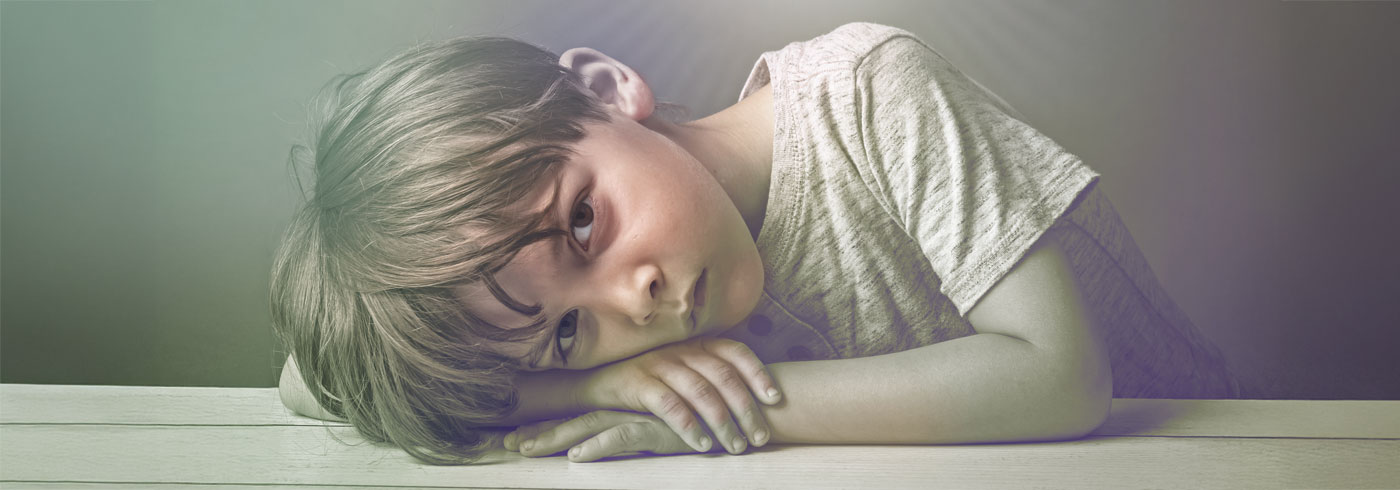
Made in God’s Image
Why we should welcome children with autism
I was standing at the stovetop preparing dinner when I noticed the youngest of our three children — our only boy — walking in constant circles from the kitchen, through the dining room, into the living room and back, snapping his fingers rhythmically as he went. Around and around.
For the first time, I whispered a question I never expected to ask: “Does he have autism?”
We’d noticed some struggles, especially at school, but that moment led to a series of conversations, evaluations, and finally, a formal diagnosis.
The question I whispered in my kitchen eventually grew into a deeper theological question: Is autism also part of God’s image?
I didn’t ask it out loud at first. But it echoed through my thoughts at every pediatric appointment and teacher conference, and especially in moments when I watched my son struggle to fit into spaces that weren’t designed with him in mind.
It’s a question that opened my eyes to a bigger truth: God’s image is revealed not in sameness, but in sacred diversity.
At the heart of our faith is the unshakable truth that every human being is made in God’s image. Genesis 1:27 says, “God created mankind in his own image, in the image of God he created them; male and female he created them.”
This includes individuals with autism. The “image of God” (in Latin, imago Dei) doesn’t depend on outward appearance or physical and mental ability. It speaks to the essence of being made by God, for God.
God’s image in humanity means every person reflects something of the divine — even those who think and behave differently.
Spaces of Belonging
Autism Spectrum Disorder (ASD) is a neurological condition that affects how a person communicates, processes information, and engages with the world.
Because ASD is a spectrum, each person with autism experiences a unique set of challenges and strengths. No two individuals are exactly alike. Some are nonverbal, and others are highly articulate. While some have heightened sensitivity to sound or light, others seek out sensory input.
My family has navigated the disorientation of diagnosis, the grief of lost dreams, the weight of unknowns, and the hope that churches will be places of understanding, not isolation.
I’ve sat through services, acutely aware of my son’s stimming behaviors and the potential distraction they might cause, all while feeling the weight of every meltdown.
I know what it’s like to make a slow exit from the auditorium under the judgmental gaze of fellow worshippers.
As a leader, I’ve carried these experiences into ministry planning, seeking to create welcoming spaces and come alongside families that are struggling.
Jesus welcomed people others ignored, including the disabled, marginalized, and powerless.
God’s image in humanity means every person
reflects something
of the divine —
even those who
think and behave
differently.
When His disciples tried to shoo away a group of children, Jesus responded, “Let the little children come to me, and do not hinder them, for the kingdom of God belongs to such as these” (Mark 10:14).
Jesus didn’t wait for people to behave a certain way or follow unwritten rules before including them. He embraced them as they were.
Would Jesus welcome my son — vocal stimming, head tics, and all? I have no doubt He would. And if Jesus would embrace my son as he is, shouldn’t the Church?
In 1 Corinthians 12, the apostle Paul depicted the Church as a body. Paul emphasized that everyone matters. Every part of the Body is necessary.
When churches see autism as a disruption rather than a reflection of God’s image, they are not only excluding families, but diminishing the fullness of Christ’s body.
Belonging is about more than just attending services. Like everyone else, children with autism want to feel known and loved.
Four Myths
Although most church leaders want to create welcoming environments, four common myths about autism can create barriers to inclusivity.
The first misconception is that autism is merely a behavioral issue. Autism is neurological, not a lack of discipline. A child’s sensory overload, communication difficulties, and anxiety may look like misbehavior, but they are not intentional acts of defiance.
Labeling neurological responses as bad behavior not only perpetuates misunderstanding, but it also risks further isolation and harm to children and their families.
Church leaders should avoid defaulting to a moral lens when interpreting behavior in children with autism. Instead, we must develop compassionate curiosity, asking, What is this child trying to communicate? What sensory needs might be unmet? How can we adjust our environment to support the child and family?
Recognizing that autism is not about discipline, but difference allows us to shift from judgment to understanding and from exclusion to inclusion.
Second, leaders may assume kids with autism are not engaged. Worship and discipleship look different from one person to the next. A child who avoids eye contact may still be listening. A nonverbal child may worship through movement rather than singing.
There is no one-size-fits-all approach to children’s discipleship. When we place rigid expectations on how kids should behave in church, we risk mistaking neurodivergent expressions for spiritual apathy.
God meets children in the quiet, the stillness, the stimming, and the pacing. Our job is not to force uniformity but to create environments where everyone can learn about and experience the love of Jesus.
A third myth is that ministering to children with autism requires extensive resources and financial investments. Inclusion is a matter of mindset, not budget. Small changes like volunteer training, sensory friendly spaces, and flexible expectations can make a big impact.
Even if specialized equipment or full-time staff are out of reach, a willing heart, teachable spirit, and desire to reflect Christ’s love can go a long way toward ministering to children with autism.
Start small. Have one conversation with a family, learn from one child’s needs, or adapt one part of your children’s ministries.
Finally, some may worry that welcoming kids with autism will create disruptions. Churches already make space for crying babies and energetic toddlers. Why not extend that same grace to older children as well?
Some behaviors during services may challenge routines, but children with autism are not disruptions. They are part of the divine image and body of Christ.
When we welcome those who move, vocalize, or process differently, we don’t lose reverence. We gain a richer expression of worship.
Children with autism often bring raw honesty, authentic faith, and unique connection with God. They remind us worship is about presence, not performance.
Inclusion and belonging help our churches reflect the fullness of God’s kingdom, where every person holds sacred value.
Seeing my son through the lens of imago Dei has changed me. His diagnosis didn’t reveal a problem, but a new way to see God.
Every person with autism is created by God, known by Him, and designed for a purpose. It is our responsibility and privilege to ensure all children have a place to grow and thrive in Christian community.
Adapted from Autism in the Church: A Guide for Pastors and Parents (Springfield, MO: Gospel Publishing House, 2026).
This article appears in the Spring 2026 issue of Influence magazine.
Trending Articles
Influence Magazine & The Healthy Church Network
© 2026 Assemblies of God