Theological Reading for Pentecostal Ministers
Seven books by Spirit-filled scholars
Think before you speak. Read before you think.”
Fran Liebowtiz offered teens that bit of advice in a 1978 essay, but it works for pastors too. Our ministries of preaching, teaching, and counseling require us to speak thoughtfully about a wide range of issues. We cannot do that without hitting the books.k
In this issue of Influence, rather than reviewing any books in detail, I want to recommend several I have been reading, all written by Pentecostal scholars.
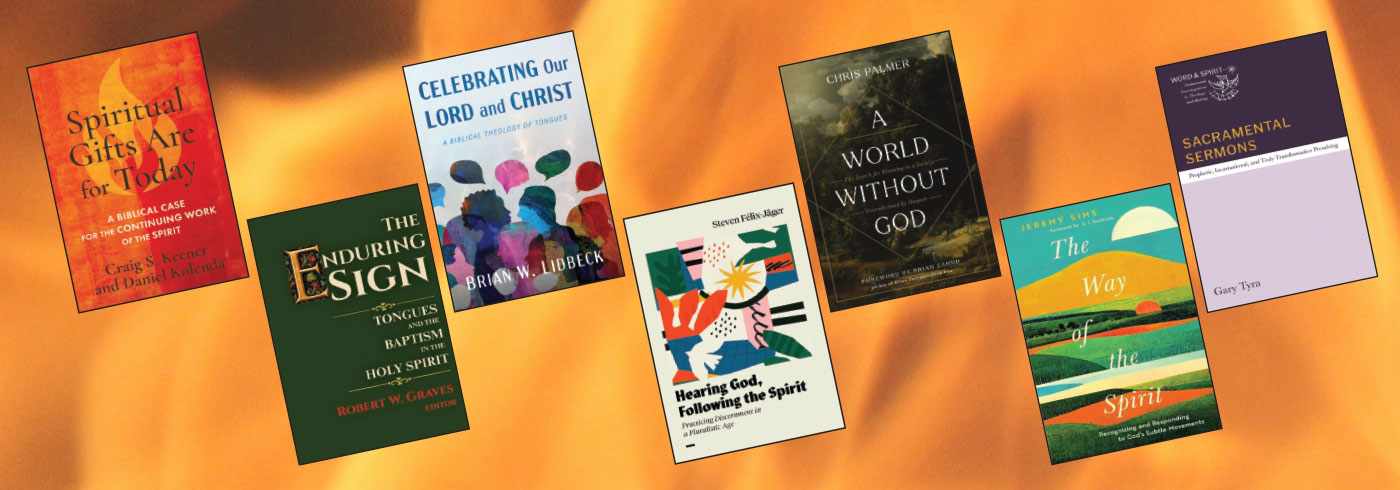
First up is Spiritual Gifts Are for Today (Baker Academic) by Craig S. Keener and Daniel Kolenda.
“Scripture presents the full range of spiritual gifts as valid for the entire course of this age,” they write in the Introduction. “Even if everyone were doing them wrong (which we do not believe is the case), that would not mean that these gifts cannot be done right” (emphasis in original).
The case for continuationism necessitates a case against cessationism, the idea that miraculous gifts — particularly prophecy, tongues, and healing — ended with the closing of the apostolic era.
But as Keener and Kolenda note, no Scripture makes this argument. “Thus, to claim that particular spiritual gifts have ceased is to impose a postbiblical theological grid on the Bible,” they conclude.
The authors also offer useful corrections to the excesses of “wacky charismatics” (their term) who practice neither the discernment nor order that Scripture requires.
With 500 pages of text and 100 pages of bibliography and indexes, Spiritual Gifts for Today is an exhaustive treatment of the subject. (At 2.07 pounds, it’s also a bit exhausting to hold.)
What struck me most about the book, however, is how it inspired me to seek spiritual gifts to glorify Christ and edify others. I don’t normally react this way to academic books, but the authors are right, so we should do what Scripture says: “Follow the way of love and eagerly desire gifts of the Spirit, especially prophecy” (1 Corinthians 14:1).
Another book that presents the biblical foundations of Pentecostal doctrine and practice is The Enduring Sign, published by The Foundation for Pentecostal Scholarship and edited by Robert W. Graves. It is an anthology of essays about tongues as the initial physical evidence of baptism in the Holy Spirit.
As Graves puts it, “Although not every contributor expresses the same degree of certainty on every point, the essays in this volume collectively argue that the Classical Pentecostal position is biblical, reasonable, and theologically responsible.”
I may be partial to the book because it opens with Allen Tennison’s “What We Believe About Speaking in Tongues,” first published in the Fall 2024 issue of Influence, and because I know several of the authors personally.
But as a Pentecostal, I also believe it’s important to exhibit a Berean mindset that examines (and reexamines) Scripture eagerly to make sure a doctrine is true (Acts 17:11). Moreover, if a doctrine is true, then it’s important we pass it along to the next generation.
While we’re on the topic of tongues, let me recommend Brian W. Lidbeck’s Celebrating Our Lord and Christ (Wipf and Stock).
“The central thesis of this work is that the biblical texts containing a reference to glossolalia exhibit a strong connection between Christ’s exaltation as Lord and the manifestation of this charism,” Lidbeck writes.
Lidbeck demonstrates this point by examining references to tongues in Luke-Acts, Mark, and 1 Corinthians.
Our ministries of preaching, teaching, and counseling require us to speak thoughtfully about a wide range of issues. We cannot do that without hitting the books.
I appreciate the Christological focus of this book. Pentecostals have been described as “people of the Spirit,” but we should also be described as “Jesus people” because the Spirit constantly points us to Christ, even in our Spirit-inspired speech.
As Paul writes, “I want you to know that no one who is speaking by the Spirit of God says, ‘Jesus be cursed,’ and no one can say, ‘Jesus is Lord,’ except by the Holy Spirit” (1 Corinthians 12:3).
I was also intrigued by Lidbeck’s use of the longer ending of Mark (16:9–20, especially 17–18). Scholars debate whether this was original to the Gospel, but even if it wasn’t, it is an early witness to the role tongues played in propagating the good news in early Christianity.
My fourth recommendation is Steven Félix-Jäger’s Hearing God, Following the Spirit (Baker Academic).
We live in a culture characterized by pluralism, which Félix-Jäger defines as “a social condition where different groups, cultures, identities, and practices exist side by side.”
Such differences aren’t necessarily bad. As the descendant of Scotch-Irish immigrants, I’m grateful that pluralism means I can eat tacos and tikka masala rather than haggis and Cullen skink.
According to Félix-Jäger, the real challenges of our pluralistic age center around “global exposure, religious diversity, misinformation, and a bunch of -isms (relativism, nationalism, secularism, reductionism, etc.).” They are where living alongside people with very different cultures, identities, and practices becomes especially difficult.
This book helps believers develop the ability to discern what God is saying and what they should do in a culture of endless alternatives.
Chris Palmer’s A World Without God (Zondervan Reflective) also engages in cultural analysis, but very differently. In fact, the book’s genre is hard to describe — a mixture of narrative, philosophy, theology, literature, and daily headlines.
On the surface, the book narrates the author’s tour through Novemberton, a fictional town where religion is remembered but not practiced.
At a deeper level, Palmer presents a catalog of the various philosophies, ideologies, and practices people use to construct meaning when they no longer believe in God.
John Lennon famously encouraged his fans, “Imagine there’s no heaven.” He seemed to think “living for today” would solve everyone’s problems.
Palmer shows living for today results instead in progress without purpose, boredom and hollowness, existential emptiness, the collapse of the self, non-redemptive suffering, and no escape from meaninglessness.
The good news is we don’t have to live in Novemberton!
My sixth recommendation is The Way of the Spirit (IVP Formatio) by Jeremy Sims.
“I often tell my students that the Spirit they’re searching for isn’t waiting on the other side of their success. He’s already within their confusion,” Sims writes.
The important thing, then, is to pay attention to what the Spirit is saying and doing in the present moment. “I’ve come to see that much of the Christian life is not about gaining more faith but giving more attention,” Sims says.
He helps readers do that by identifying seven waypoints where the Spirit accomplishes His work in us: holy threshold, desert formation, repent reordering, inner journey, dark night, divine encounter, and sacred ordinary.
Finally, let me recommend Gary Tyra’s Sacramental Sermons (Cascade Books). Please don’t be put off by the title. Pentecostals may not typically use the language of sacraments, but whatever the language, Tyra’s understanding of preaching is thoroughly Pentecostal.
Tyra identifies three earmarks of sacramental sermons. “They are prophetic in nature, incarnational in manner, and truly transformative in effect,” he writes (emphasis in original).
The book divides into three parts. Part One examines the nature and support — biblical and historical — for sacramental sermons. Part Two examines why they are particularly necessary in our secular age. And Part Three outlines a four-step process for preparing and delivering them.
If your ministry involves preaching and/or teaching on a regular basis, I encourage you to read Sacramental Sermons. It will help you speak to others with genuine anointing.
This article appears in the Fall 2026 issue of Influence magazine.
Trending Articles
Influence Magazine & The Healthy Church Network
© 2026 Assemblies of God