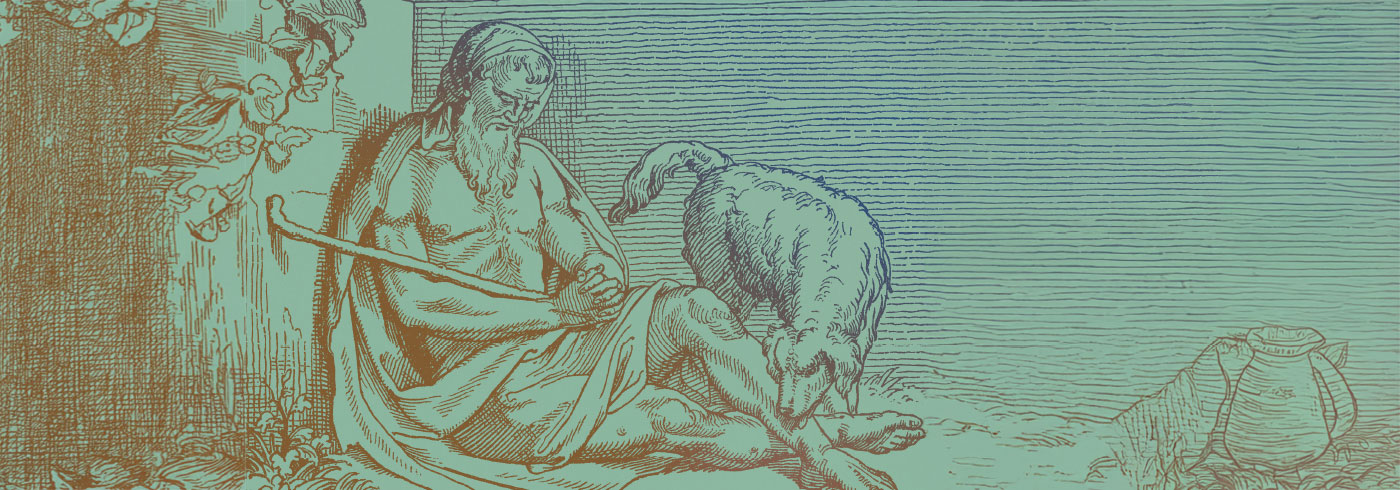
Reversal of Fortunes
What a beggar’s story reveals about God’s heart for the poor
Are you going the other way because I’m homeless? I am a human being!”
While navigating an urban setting at night, my daughter and I had moved to the other side of the street to avoid walking past a person who was obviously unhoused and, I feared, under the influence of drugs.
Although it seemed like a reasonable precaution, the indignant cry continued ringing in my ears long after the encounter: “I am a human being!”
The poor in our midst are indeed people created in God’s image. Turning away is easier and safer than moving closer. Yet Scripture calls us not only to notice human suffering, but to do something about it.
Moses said, “There will always be poor people in the land. Therefore I command you to be openhanded toward your fellow Israelites who are poor and needy” (Deuteronomy 15:11).
This theme of openhandedness is central to the New Testament message, as Jesus challenges the privileged and proclaims good news to the poor. Luke’s writings especially emphasize the humanity of those society overlooks — and God seeks to uplift.
Rich and Poor
The story of the rich man and Lazarus in Luke 16:19–31 is paradigmatic not only of the Gospel writer’s concern for impoverished and marginalized people, but also his theology of a Savior who reverses fortunes and turns the world’s value system on its head.
Its context is a dialogue between Jesus, His disciples, and the Pharisees.
In Luke 15, the Pharisees criticized Jesus for welcoming and eating with tax collectors and sinners (verses 1–2). Jesus responded by sharing the parables of the Lost Sheep, Lost Coin, and Lost Son, highlighting God’s compassion for sinners.
The Parable of the Shrewd Manager follows (Luke 16:1–15). Jesus observed that worldly money managers are sometimes wiser than the religious when it comes to planning ahead and building relationships (verse 8).
Stewardship is a measure of trustworthiness — and a reflection of the heart. As Jesus said, “No one can serve two masters. Either you will hate the one and love the other, or you will be devoted to the one and despise the other. You cannot serve both God and money” (verse 13).
The Greek word for money, mamōnas, is translated “mammon” in some English Bibles, including the King James Version. Mammon might include any material thing that takes the place of God in a person’s heart. In other words, it is a treasure that becomes an idol.
This prompted sneering from the Pharisees, who “loved money” (verse 14). Jesus explained that worldly priorities differ from God’s: “What people value highly is detestable in God’s sight” (verse 15).
Jesus illustrated this point with another story. Like the previous parable, it begins with the words, “There was a rich man” (16:1,19).
Found only in Luke, the story of the rich man and Lazarus has several unique features. It is the only parable with a named character — paradoxically, the man who was virtually invisible to society. Further, much of it takes place outside of ordinary human existence, in mysterious realms of the afterlife.
The story bears the marks of intertextuality. Commentators have suggested influences from Egyptian, Greco-Roman, and Jewish literature. It also contains details rarely seen in parables, such as descriptions of a character’s appearance.
The rich man was “dressed in purple and fine linen” (verse 19), apparel that would have been unattainable for most. Purple was a costly Phoenician dye created from murex snails. The man’s purple robe, likely made of wool, identified him as a member of the ruling class.
White garments of fine Egyptian linen were another extravagance. The combination of purple and linen trumpeted the man’s near-royal status.
Luke adds that the man “lived in luxury every day.” The language is suggestive of merriment, lavish banquets, and perhaps gluttony. The English Standard Version says he “feasted sumptuously every day.”
Meals in first-century Judea typically consisted of modest staples like lentil soup, fruit and bread. Banquet spreads were reserved for special occasions, such as weddings. Only the wealthy could regularly indulge in grand feasts.
Outside the rich man’s gate was a beggar named Lazarus (verse 20). Rather than luxurious clothing, Lazarus was covered in sores. While the rich man was enjoying his banquets, Lazarus longed — in vain — for scraps from the table (verse 21).
Turning away is easier and safer than moving closer. Yet Scripture calls us not only to notice human suffering,
but to do something about it.
Lazarus was placed at the rich man’s gate, meaning he was probably disabled or too sick to walk. Villagers may have carried Lazarus there, appealing to the rich man’s sympathies. They would have known this wealthy ruler had the means and legal obligation (according to Jewish law) to assist Lazarus. Yet no help came.
Like the priest and Levite in Jesus’ Parable of the Good Samaritan (Luke 10:31–32), the rich man passed by and ignored his neighbor’s suffering.
Dogs that came to lick the beggar’s wounds were not companions, but tormentors. The Old Testament depicts dogs as wild scavengers that ate corpses (1 Kings 14:11; 16:4; 21:19,23–24; 22:38). For Lazarus, beasts lapping at his ulcerated, emaciated flesh added insult to injury.
A feature typically found on large estates or palaces, the gate represents separation between Lazarus and the rich man. Gates kept out undesirables and hid people like Lazarus from view.
However, it is impossible to avoid the Lazaruses of the world entirely. The rich man would have passed through the gate many times, giving Lazarus an opportunity to plead his case — or at least hope for pity.
Expendables
Lazarus belonged to a class of people known as expendables. This vulnerable population — which included widows, orphans, and the disabled — experienced such extreme poverty many died prematurely.
According to Craig Keener, expendables comprised about 15% of urban populations in the first-century Roman world. Some 10% of the overall population lived perilously close to falling into expendable status, while 70% were peasant farm laborers. Meanwhile, the richest 2% owned at least half the wealth.
That Luke named the beggar would have seemed strange to his audience, especially since the wealthy man remained in anonymity. This foreshadows the reversal soon to unfold.
Many saw Lazarus as expendable, but Jesus assigned him a name. A name gives Lazarus — and others like him — agency, honor, and human dignity. This simple but profound gesture is emblematic of Christ’s good news to the poor in Luke (4:18). The God who sees every sparrow and counts every hair (12:6–7) knows and values those society disregards as expendable.
Some assumed the rich man’s opulent lifestyle was a sign of divine approval. By the same logic, they might have thought Lazarus deserved his misfortune.
This was the theology of some Pharisees. They viewed exterior qualities as evidence of God’s favor (Luke 11:39–40; 18:11–12). Such thinking may explain why the Pharisees mocked Jesus’ teaching about money.
Wealth, positions, and human accolades don’t impress God. He looks beyond the surface to see the heart (Luke 16:15).
Eschatological Reversal
Despite their vastly different lifestyles, the rich man and Lazarus had one thing in common: They both died (Luke 16:22–23).
Given his starvation, weakness, and exposure to the elements and wild animals, it is unsurprising that Lazarus succumbed. It’s unclear how much time passed before each man reached the end of his life. However, death eventually comes for all (Ecclesiastes 3:1–2; 9:5; Luke 20:29–32; Hebrews 9:27).
The rich man was buried, presumably with pomp and honor. There is no mention of funerary rites for the beggar. The poor man’s passing would have received little attention on earth, but it didn’t go unnoticed in heaven. God dispatched angels to carry Lazarus tenderly to Abraham’s side.
Meanwhile, the rich man went to Hades, where he experienced torment. Hades is a Greek word that describes a shadowy underworld existence. In Judaism, it was thought to be an intermediary holding place for the condemned awaiting judgment.
The depiction of Lazarus and the rich man observing one another from their respective destinations is consistent with descriptions of the afterlife in Second Temple Jewish literature. Though separated, the blessed and condemned could see the fate of the other.
From Hades, the rich man “looked up” to see Lazarus at Abraham’s side (Luke 16:23). This is an eschatological reversal of their earthly existence, where Lazarus had been in anguish while looking up at the rich man passing by.
Calling out to Abraham, the rich man now sought help. “Father Abraham, have pity on me,” he said. (verse 24).
In addressing Abraham this way, the rich man made the mistake John the Baptist warned against in Luke 3: “Do not begin to say to yourselves, ‘We have Abraham as our father.’ For I tell you that out of these stones God can raise up children for Abraham. The ax is already at the root of the trees, and every tree that does not produce good fruit will be cut down and thrown into the fire” (verses 8–9).
John went on to describe what this good fruit looks like: “Anyone who has two shirts should share with the one who has none, and anyone who has food should do the same” (verse 11).
Even tax collectors responded to John’s message with repentance, but the Pharisees held back (3:12; 7:29–30). Like the rich man, the Pharisees “rejected God’s purpose.”
Earlier in Luke, Jesus called a woman who had been disabled for 18 years “daughter of Abraham” and those who opposed her healing “hypocrites” (13:15–16). Jesus wanted the Pharisees to know they were in danger of going the way of the rich man. If they continued on the path of greed and hypocrisy, the Pharisees might find themselves outside God’s kingdom even as expendables, Gentiles, and tax collectors streamed to Abraham’s side.
The rich man’s appeal for pity and physical relief is another reversal in the narrative. These were the very things he withheld from Lazarus. The entreaty for a single a drop of water parallels the poor man’s earlier desire for crumbs.
The fallen ruler’s desperate plea echoes the cries of expendables and other hurting people throughout Luke and Acts (Luke 5:12; 9:38; 17:12–13; 18:35–39; Acts 3:3).
Yet despite his humbling predicament, the rich man’s request to “send Lazarus” (Luke 16:24) reveals an ongoing attitude of entitlement. Even here, he regarded Lazarus as a servant who should do his bidding, tend to his needs, and offer the kind of assistance he denied. The fact that the rich man recognized Lazarus and knew his name reveals he was aware of this neighbor’s plight all along.
Abraham reminded the rich man he enjoyed a comfortable life while denying Lazarus aid. Now Lazarus was comforted as the rich man suffered (verse 25).
This is not a theological explanation of their situations. Rather, it simply highlights the eschatological reversal many will one day experience. As Jesus says in Luke 13:30, “Indeed there are those who are last who will be first, and first who will be last.”
The fact that the rich man recognized Lazarus and knew his name reveals he was aware of this neighbor’s plight
all along.
Scripture does not teach that the poor will be saved and the rich condemned. Abraham himself was wealthy, as were a number of people Luke upholds as positive examples, including the women who supported Jesus’ ministry, the repentant Zacchaeus, and Barnabas (Luke 8:2–3; 19:2–10; Acts 4:36–37).
Because Lazarus is a passive character, there are no details regarding his spiritual life. Nevertheless, the beggar’s presence at “Abraham’s side” (Luke 16:22) implies Lazarus was among the pious poor Jesus promised to comfort (6:20–21).
The rich man likely gained his wealth by sinfully exploiting others. Like the rich fool in Luke 12, he chose to worship mammon instead of honoring God and loving his neighbors.
As in life, the rich man and Lazarus were once again on opposite sides of a great divide. Yet in eternity, there is no opportunity for crossing over (Luke 16:26).
After repeatedly choosing not to walk through the gate and help Lazarus when he could, the rich man found an impenetrable boundary separating them.
This point of no return is the horrifying end for all who are not rich toward God (Luke 12:21). Jesus warned, “There will be weeping there, and gnashing of teeth, when you see Abraham, Isaac and Jacob and all the prophets in the kingdom of God, but you yourselves thrown out” (Luke 13:28).
The rich man finally asked Abraham to send Lazarus to his brothers, so they might avoid “this place of torment” (Luke 16:27–28). He recognized his family was following the same wicked path.
This desire for repentance and evangelism came too late, however. Abraham said the brothers had Moses and the Prophets — that is, the Old Testament Scriptures.
The rich man thought it would be more convincing if someone rose from the dead. But Abraham replied that if they did not listen to Moses and the Prophets, they would also refuse one who rose from the dead.
This foreshadows Christ’s resurrection, which many through the ages have denied or ignored. In a post-resurrection appearance on the Emmaus road, Jesus would clarify that Moses and the Prophets pointed to Him (Luke 24:27).
Had the rich man and his brothers studied the Scriptures, they would have known God would judge those who oppress the vulnerable (Leviticus 19:18; Deuteronomy 15:1–3; 24:10–22; Isaiah 3:14–15; 58:6–7; Amos 2:6–8). Believers who heed the words of Moses and the Prophets act justly, care for the poor, and love their neighbors.
Divine Benevolence
From the opening chapter of his Gospel, Luke announces a reversal of fortunes for both the downtrodden faithful and those who put their trust in positions and riches.
Mary’s Magnificat exults that the Lord has “brought down rulers from their thrones” but “lifted up the humble” (Luke 1:52). “He has filled the hungry with good things but has sent the rich away empty” (verse 53).
During His sermon at Nazareth, Jesus read from Isaiah 58:6 and 61:1–2, identifying himself as the One anointed “to proclaim good news to the poor,” free the imprisoned and oppressed, open blind eyes, and “proclaim the year of the Lord’s favor” (Luke 4:18–19).
There are potential spiritual and social implications in each of these categories. Prisoners included individuals who were incarcerated for debts, like the servant in Matthew 18:30. Blind individuals often suffered extreme poverty, reducing them to begging (Luke 18:35).
The “year of the Lord’s favor” likely refers to the Jubilee year, a time when debts were cancelled (Leviticus 25:10).
God’s justice is about more than power and economics, however, for faith and sin transcend these strata. The Lord is merciful toward all who “fear him” (Luke 1:50), from the centurion to the widow (7:1–17).
Above all, Jesus came to seek and save the spiritually lost, whether poor or wealthy (Luke 19:10). In God’s economy, socioeconomic standing is not an obstacle to eternal blessings.
Luke’s Beatitudes record Jesus saying, “Blessed are you who are poor, for yours is the kingdom of God. Blessed are you who hunger now, for you will be satisfied” (6:20–21).
Jesus goes on to pronounce woes on the godless rich, who have already received their comfort (verse 24). Some “who are well fed now” will “go hungry” (verse 25).
While the parallel passage in Matthew focuses on the spiritual — “those who hunger and thirst for righteousness” (5:6) — Luke highlights immediate, physical needs.
Luke also anticipates the eschatological banquet Old Testament writers foresaw (Psalm 107:9; Isaiah 25:6; 49:10). This theme develops throughout the Third Gospel (Luke 12:37; 13:29; 14:12–24), providing assurance that the poor, hungry, hurting, and marginalized are welcome at heavenly tables.
God, who gives generously and extends mercy, calls His people to do the same (Luke 6:30,36; 11:11–13). In God’s economy, lending without expecting repayment leads to great reward (6:35).
The Parable of the Rich Fool in Luke 12 illustrates the peril of selfish, short-sighted living. After experiencing a bumper crop, the man built bigger barns, intending to “eat, drink and be merry” (verse 19). Unaware that his life was swiftly coming to an end, the rich fool gave no thought to honoring God or sharing his good fortune with others.
This man’s folly was not his wealth, but his spiritual poverty (verse 21). Misplaced priorities left him prepared for a day that would never come but unprepared for death, which inevitably comes for all.
In a heartbeat, the foolish man’s fortune reversed as he entered eternity. Christ’s warning is as relevant today as in Luke’s time: “Watch out! Be on your guard against all kinds of greed; life does not consist in an abundance of possessions” (Luke 12:15).
Jesus challenges materialistic mindsets that continue to drive human greed and exacerbate poverty. The appropriate response is to safeguard what matters most and watch out for those things that lead hearts astray.
Early Church
Although Luke’s teaching on wealth and poverty is less explicit in the Book of Acts, the new Christian community demonstrated what it looks like to welcome all and practice compassion.
Believers who heed the words of Moses and the Prophets act justly, care for the poor, and love their neighbors.
In the Greek world, people paid fees to join religious associations or guilds, which covered such things as festival expenses. Membership depended primarily on an individual’s ability to pay.
By contrast, Christian fellowship was open to all social classes. While there were no compulsory dues, converts often gave enthusiastically out of a desire to honor their Savior and help their neighbors.
The Early Church took seriously the words of Jesus, who said, “Where your treasure is, there your heart will be also” (Luke 12:34). Acts 2 depicts Spirit-filled believers selling property and giving to those in need (verse 45).
So successful were these efforts that Acts 4:34 declares “there were no needy persons among them.” This does not mean all Christians divested themselves of wealth to live in poverty. They likely sold parcels of land as critical needs arose.
In Acts 6, Luke details the Church’s ministry to Greek and Jewish widows. After Agabus prophesied of a famine in Acts 11, the disciples collected an offering to provide emergency relief (verses 28–30).
In all these things, early Christians lived out the saying of Jesus: “It is more blessed to give than to receive” (Acts 20:35).
Call for Compassion
The story of the rich man and Lazarus highlights Luke’s message that God cares about the poor and marginalized.
There may not be a Lazarus immediately in view, but hurting people exist in every community. About 1 in 10 Americans experienced poverty during 2024, according to the U.S. Census Bureau. The World Bank Group estimates 831 million people around the globe live in extreme poverty, subsisting on less than $3 per day.
God will one day right wrongs and reverse fortunes for the suffering faithful. Yet His Church can provide practical help even now for the Lazaruses of the world.
We must welcome the poor as the Early Church did. This requires an inclusive culture that values people without regard to socioeconomic status (James 2:1–4).
Congregations can remove barriers to church participation (e.g., offering scholarships for youth trips and camps); establish a relational presence in economically depressed neighborhoods; and support church plants in poor urban and rural areas.
Churches should identify and meet material needs among congregants. Imagine a faith community fulfilling Moses’ vision of openhandedness so completely that everyone has enough.
Even as we seek the outpouring of Acts 2:4, evangelism of Acts 2:41, and miracles of Acts 5:15, the benevolence of Acts 4:34 ought to be a goal of every congregation.
Churches also have an obligation to care for the broader community beyond their walls. This might involve housing the homeless, providing free after-school care, feeding the hungry through meals and food pantries, distributing school supplies, supporting foster care, offering job services and GED preparation classes, and helping settle refugee families.
There should be opportunities for believers to grow in compassion through not only giving, but also serving. Congregations can launch independent initiatives or partner with charities, parachurch organizations, or government agencies.
In addition to local efforts, churches should help meet needs around the world. This can include giving to missionary projects and compassion organizations like Convoy of Hope. Short-term missions trips allow congregants to see needs up close and develop a heart for helping.
Finally, pastors should teach their people to advocate for justice. Proverbs 31:8–9 says, “Speak up for those who cannot speak for themselves, for the rights of all who are destitute. Speak up and judge fairly; defend the rights of the poor and needy.”
Jesus spoke up for Lazarus and others like him by telling this poor man’s story and affirming his value in God’s sight amid a culture that treated such people as expendable.
Christians should be the first to push back against harmful stereotypes, challenge oppressive systems, and support protection and practical help for the vulnerable.
There are Lazaruses all around us — outside our gates and on the other side of the world. Some are unhoused. Others suffer quietly behind closed doors.
Each one is a human being, made in God’s image. Each has a name, story and eternal soul. The Lord sees and loves those society casts aside. We must see and love them, too.
Jesus is still calling His Church to move toward the hurting, open gates, minister relief, stand for justice, and demonstrate His compassion to a world in need.
This article appears in the Summer 2026 issue of Influence magazine.
Trending Articles
Influence Magazine & The Healthy Church Network
© 2026 Assemblies of God